


Imagine driving a car where the dashboard doesn’t quite work. You can steer and move forward, but you don’t know how fast you’re going, how much fuel is left, or when something’s about to go wrong. You’re moving, but mostly by instinct.
For all our progress in technology, this is how machines experience humans today.
They react when we tap a screen, click a button, or issue a command. But they miss what happens before that moment: the intention forming, the effort building, the signal traveling through the body. The most meaningful information never reaches them.
Anthriq is building that dashboard.
Formerly known as Nexstem, Anthriq is a deeptech startup working at the frontier of human–computer interaction. It is building the foundational hardware and data infrastructure for human-aware technology. By listening to, decoding, and translating the vast network of biosignals, including EEG (brain), ECG (heart), and EMG (muscle), they are enabling a future where technology feels less like a tool we operate and more like a seamless extension of how we think and move.
The Genesis of Anthriq
The origins of Anthriq trace back to a shared curiosity between two engineering students at BITS Pilani — Siddhant Dangi and Deepansh Goyal. Like many students, they built robots, experimented with hardware, and explored emerging technologies. But one encounter changed the direction of their work.
A conversation with a surgeon working with amputees revealed a persistent limitation. Despite advances in prosthetics, many devices remained unintuitive for users. The human body could signal intent clearly but the technology receiving it struggled to keep up.
That disconnect stayed with them.
What if machines didn’t have to wait for explicit commands?
What if they could respond to intent itself?
In 2020, that question became Nexstem — a company focused on building brain–computer interfaces. Over time, the founders realised the real challenge wasn’t a single application or device. It was the lack of reliable, accessible infrastructure to read human biosignals at scale.
The problem was bigger than they first imagined. So was the opportunity.
Building the Biosignal Infrastructure
Anthriq’s vision is to provide foundational biosignal infrastructure that allows enterprises to build and deploy human-aware systems up to 10× faster. The company is guided by a simple observation: enterprises working with biosignals are repeatedly forced to rebuild the same foundational layers — from building hardware that can reliably read biosignal data, to developing the software and data pipelines needed to turn those signals into usable products. By offering this infrastructure as a reusable, reliable layer, Anthriq enables enterprises to focus on product outcomes rather than rebuilding core systems.
This is delivered through a modular, multi-layered infrastructure:
1. Signal Acquisition & On-Device Processing
Hardware systems designed to reliably capture biosignals and perform essential preprocessing at the source, reducing noise and latency before data enters downstream workflows.
2. SDKs and APIs
Structured developer tools that allow researchers and product teams to access synchronized, usable biosignal data without building custom acquisition, filtering, and pipeline layers from scratch.
3. Multimodal Biosignal Data Foundation
Support for EEG, EMG, and ECG enables biosignals to be interpreted together rather than in isolation. Over time, this creates a growing base of real-world biosignal data that improves reliability and speeds up iteration across use cases. This proprietary data will also strengthen AI models over time, creating a durable competitive advantage.
The Foundational Infrastructure for Human Aware Technology
By building a robust infrastructure first, Anthriq enables multiple use cases across diverse industries where technology must respond naturally to human intent.
The Roadmap to Human Evolution
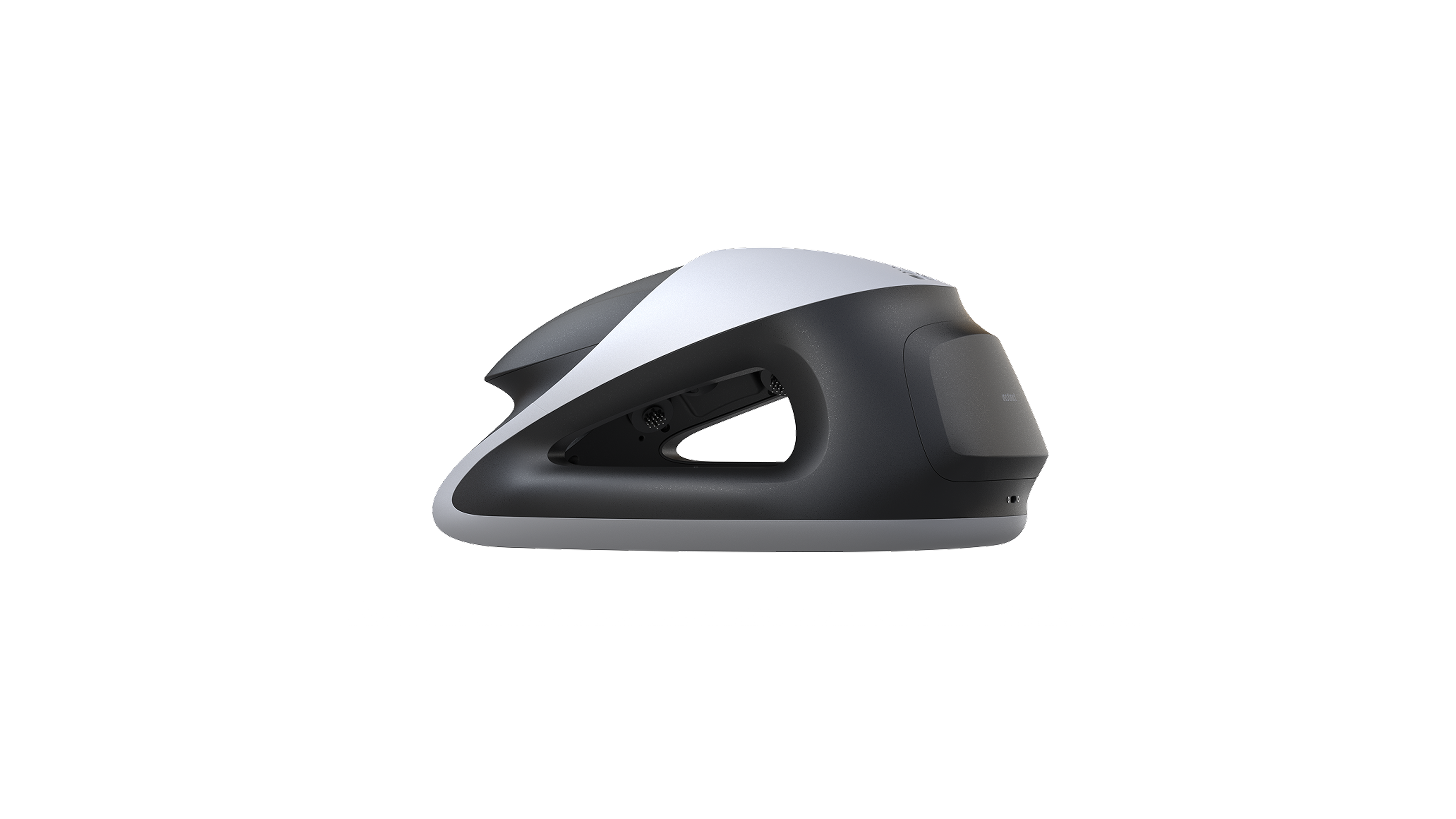
The cornerstone of Anthriq’s infrastructure is Instinct, a high-fidelity, wireless EEG headset designed to simplify complex signal acquisition for researchers and developers.
• Precision and Fidelity: The flagship device features 13-channel active electrodes that deliver research-grade EEG data while remaining portable and programmable.
• Hardware-Accelerated Signal Intelligence: Unlike standard headsets, Instinct enables real-time on-device processing for faster, leaner, and more responsive EEG analysis directly at the edge.
• Universal Adaptive fit : It is engineered with adjustable electrodes to fit any head shape, ensuring that innovators can focus on building applications rather than wrestling with hardware setup.
But Anthriq’s vision extends beyond headsets, with multiple products designed to capture and work with human intent across different form factors and use cases.
• xDot: The world's smallest non-invasive sensor, integrating EEG, ECG, EMG, PPG, BioZ, and IMU. A complete health and activity monitor in an ultra-compact design..
• xSys: A 128-channel multi-modal biosignal acquisition system designed to acquire, amplify, digitize, record, and store physiological biosignals including EEG, EMG, ECG, and EOG for clinical and research use.
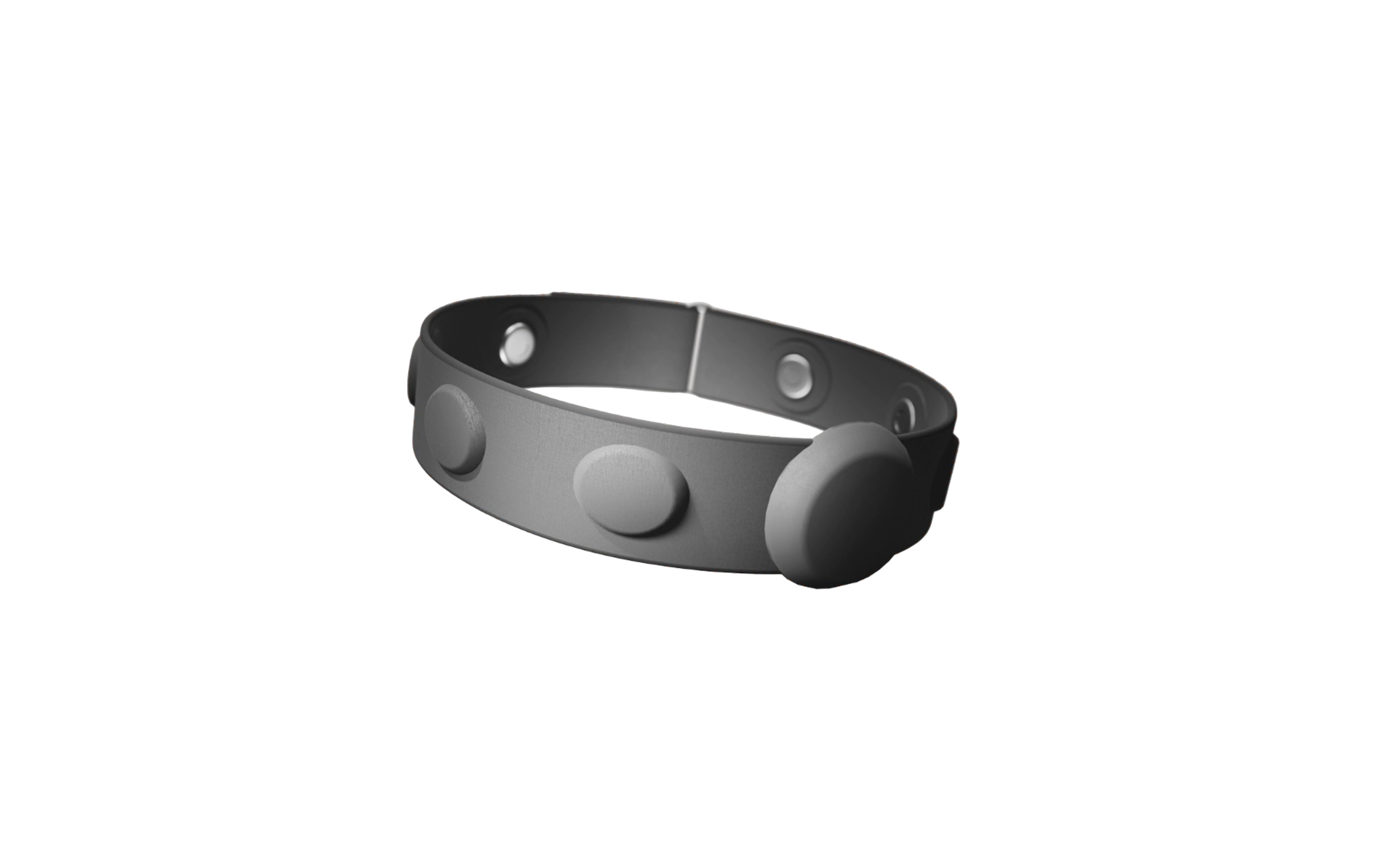
• Impulse: A wireless EMG armband designed for high-fidelity, real-time muscle signal acquisition for gesture-based control and smart interaction systems.
What Comes Next
Anthriq’s roadmap isn’t defined by a single breakthrough moment. It’s focused on steady, foundational progress — improving signal quality, expanding use cases, and enabling others to build human-aware systems more reliably and efficiently.
In many ways, the company is doing for human–computer interaction what sensors did for aviation or what processors did for computing. It’s not the visible part of the experience, but without it, everything else struggles to function.
By teaching machines to read between the signals, Anthriq is helping close a gap we’ve long accepted as inevitable. And in doing so, it’s reminding us that the most powerful technologies aren’t always the loudest, they’re the ones that listen.