



For a world increasingly obsessed with sustainability, we have spent surprisingly little time rethinking the most basic unit of what we build.
Glass has evolved. Steel has evolved. Even concrete is being reimagined. But bricks, the literal building blocks of our cities, have remained largely unchanged for centuries. Still made from topsoil. Still fired in coal kilns. Still inconsistent in quality. Still wasteful at scale.
The contradiction is hard to ignore. We are trying to build the future with materials that belong to the past.
Zerund starts exactly here.
Beyond a College Project
In 2018, three engineering students from Assam sat down with a brief to build a final year project around sustainability. Most students in their position would have looked upward, toward software, toward technology, toward something digital and scalable. David Pratim Gogoi, Rupam Choudhury, and Mousum Talukdar looked down. At the ground. At walls. At the single most ubiquitous material in Indian construction.
The brick.
It was not a glamorous choice. Bricks don't trend on LinkedIn. They don't attract early-stage buzz. But the more the three of them looked at the problem, the more they found it impossible to walk away from. India's brick industry was burning through topsoil and coal at a staggering rate, and simultaneously drowning in plastic waste with no viable outlet. Two massive, compounding problems sitting side by side, and no one asking whether they could solve each other.
That question became the seed of Zerund. What started in a college lab as an intellectual exercise turned into something much harder and much more real: a product, a company, and eventually a new category of building material.
Rethinking the Brick
Zerund’s core product looks like a brick, ships like a brick, and lays like a brick. But that is roughly where the resemblance to traditional clay bricks ends.
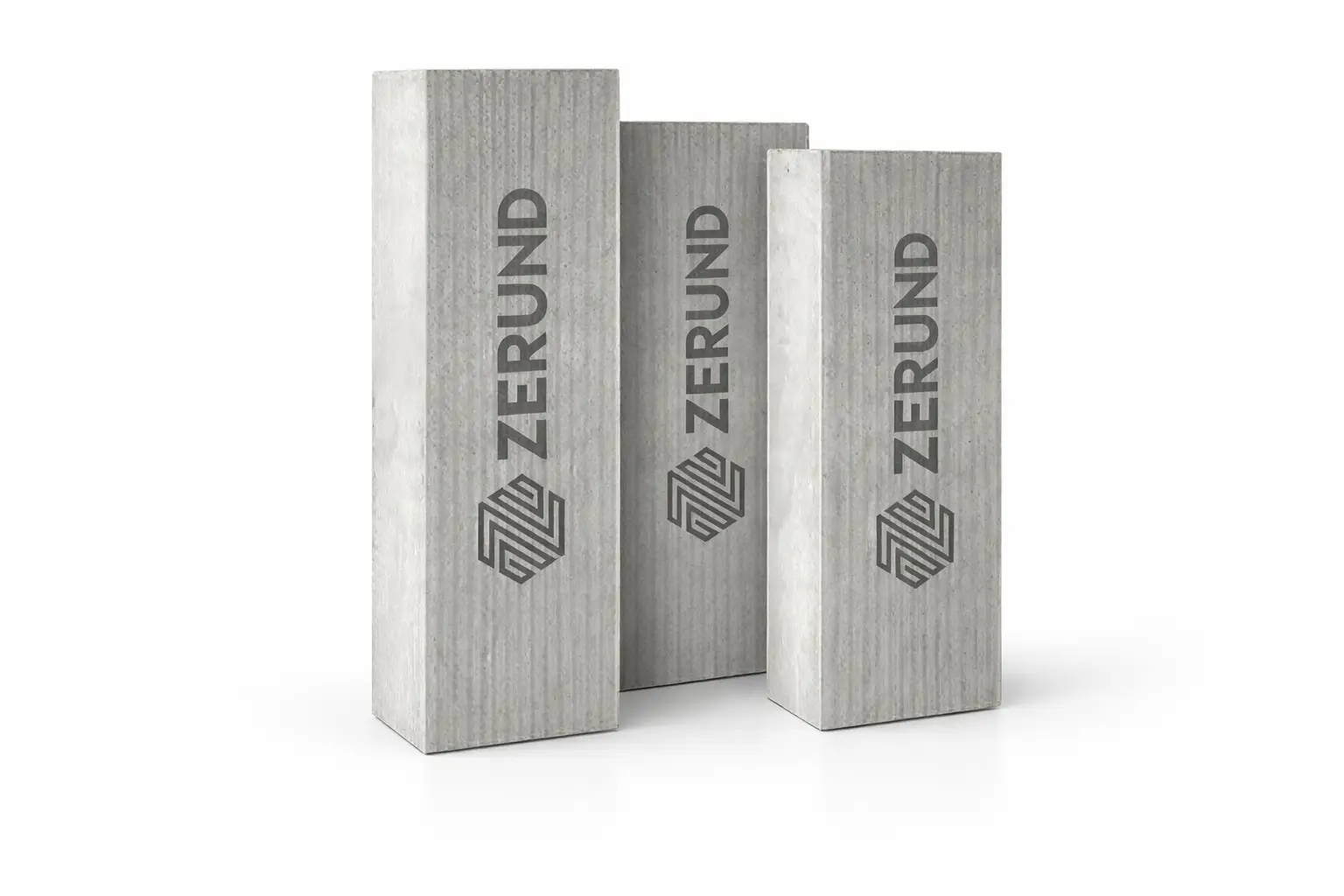
Zerund's blocks are engineered from a combination of fly ash, industrial by-products, cement, binders, and recycled plastic waste, with fly ash, pond ash and plastic accounting for up to 60 to 70 percent of the total input mix. The manufacturing process the founders developed runs across three stages: plastic waste is first shredded into microbeads, which are then integrated into the material mix in specific ratios, binding with the other inputs to produce a block that is structurally superior to what comes out of a conventional kiln.
Getting to that formulation was not straightforward. The founders spent months testing combinations, adjusting ratios, breaking samples, and starting over. The right proportions had to produce a product that was not just sustainable on paper but genuinely better to build with.
What they eventually arrived at is a block that is roughly 15 to 20 percent more cost-effective than traditional bricks, up to 30-40 percent lighter, and significantly more resistant to cracks, water, fire, and seismic stress. One Zerund block replaces multiple traditional bricks, reducing the number of units needed per square foot and cutting construction time in the process.
This is not a better brick. It is a different category of building material entirely.
What It Actually Meant to Start in the Northeast
Being first-generation entrepreneurs from Assam in 2018 meant building without a map. There was no startup ecosystem to plug into, no angel network with a deep knowledge of materials science, no community of founders who had done something similar nearby.
Early in their journey, the founders cold-called contractors. They drove to sites and asked builders to take a chance on a product that no one had heard of. They were turned down far more often than they were heard out.
Eventually, through sheer persistence, they raised between ₹20 and ₹25 lakhs, enough to lease a factory and begin manufacturing in 2019. It was a modest start, but it was real.
Then, in their very first year of operations, Zerund turned PAT positive.
For three founders who had bet everything on a product made from waste, it was the signal that changed everything. Not just financially, but psychologically.
Construction is not an early-adopter market. New materials don't get the benefit of the doubt; they get scrutiny. Contractors who have used the same red brick for decades don't switch because of a sustainability pitch. They switch when the economics make sense on-site, when breakage rates drop, when their labour spends less time laying and more time building, when the product actually performs.
Zerund earned that trust the hard way. Lower breakage, better consistency, clear cost savings, faster installation cycles. Once the numbers worked for a builder on one project, they came back for the next. The references spread. Adoption followed.
Today, Zerund’s customer list includes L&T, the Government of Assam, the Ministry of Ayush, Starbucks, and the Cable Corporation of India. These are demanding, large-scale builds where quality and consistency are non-negotiable.
From a Leased Factory to an Industry-Defining Scale
In 2021, Zerund raised ₹3 crore in their first institutional round and deployed that capital toward a goal they had been working toward since the beginning: their own factory. By 2022, it was operational. Production ramped up. Gruhas came on board that same year, and the investment opened up not just capital but the deeper infrastructure of the built environment ecosystem.
In 2024, Zerund closed their largest round to date: ₹32 crore. Today, the company operates two owned factories and runs a third as a joint venture in Maharashtra, a westward expansion that reflects how far a company rooted in the Northeast has reached.
Current installed annual capacity stands at 2 lakh cubic metres. At the same time, a traditional red brick manufacturer produces roughly 6000-8000 cubic metres annually. Zerund produces that in around 10-15 days.
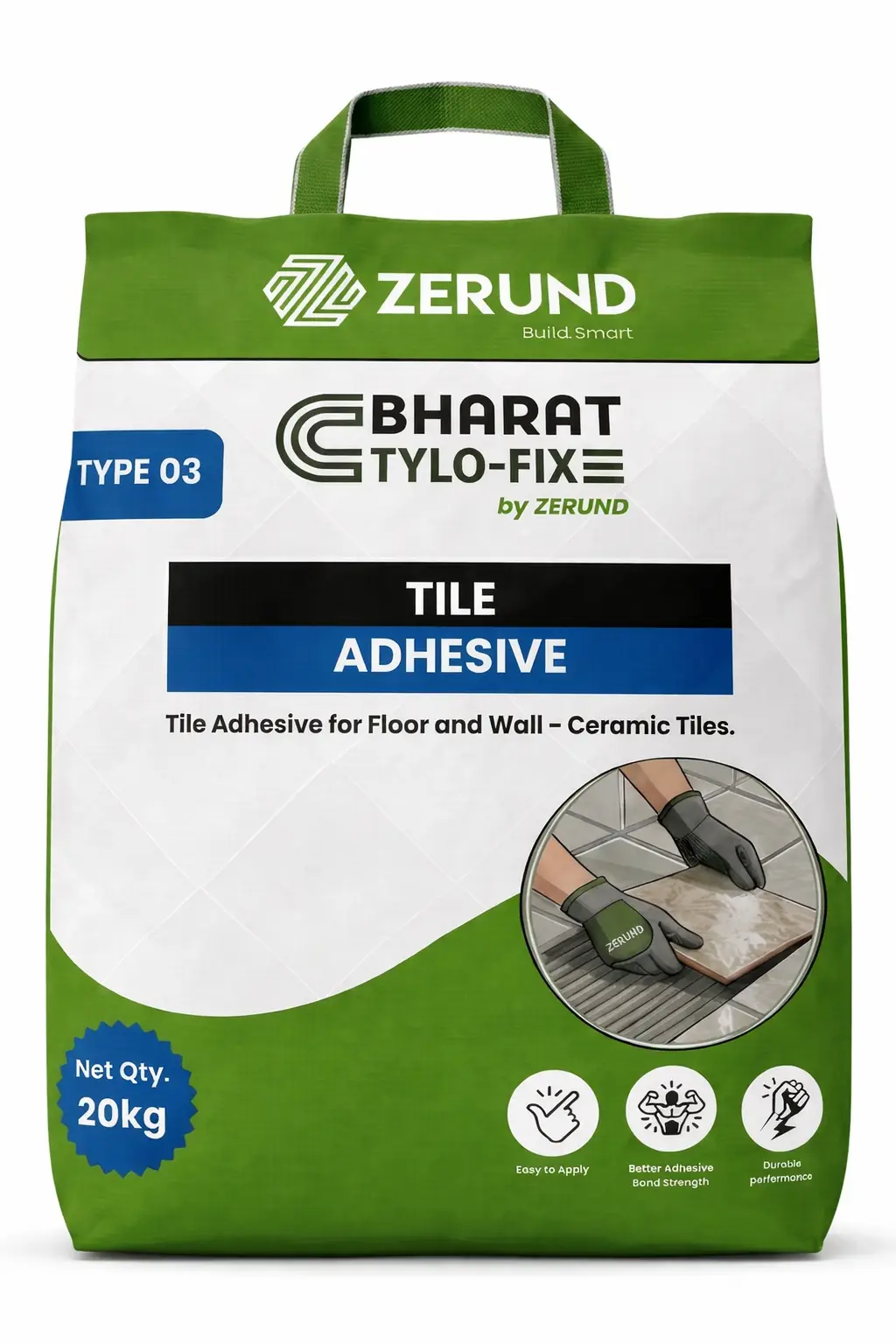
The sustainable construction equipment maker has also installed an adhesive plant which has started production of dry mix mortar at an annual capacity of 25000 tonnes.
Why This Matters Beyond the Numbers
The construction sector is under growing pressure to change. Regulations are tightening. Sustainability is becoming a procurement requirement rather than a talking point. Large developers are prioritising speed, efficiency, and standardisation in ways they never have before.
Most innovation in construction, however, has concentrated at the periphery: software platforms, procurement marketplaces, financing tools. Important, but not fundamental.
Zerund goes to the core. To the material itself.
If you can improve the unit economics, environmental footprint, and performance of the most widely used building block in the country, the impact doesn't add up. It compounds. Across every project, every site, every city that builds with it.
What Zerund represents is a shift from raw materials to engineered materials, from extraction to recycling, from fragmented and inconsistent supply to standardised, scalable production. And perhaps most importantly, it is a reminder that meaningful innovation does not always come from adding layers on top of an industry. Sometimes it comes from rebuilding it, starting with the very first brick.
At Gruhas, we back founders who are willing to look at the most fundamental parts of the built environment and ask questions that everyone else has stopped asking. Zerund's founders are doing exactly that.
We are proud to be building with them.